Overview
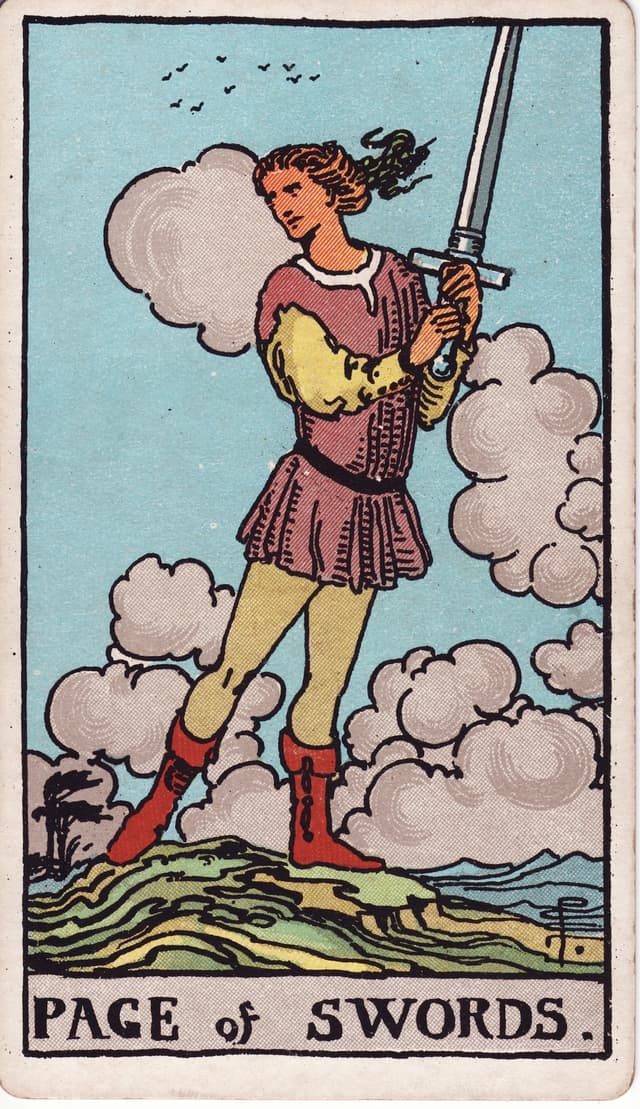
Alert, curious, and ready for anything, the Page of Swords stands with blade raised and eyes scanning the horizon. This is the mind at its most eager and vigilant: hungry for information, quick with words, and not yet wise enough to know which battles are worth fighting.
Symbolism
A lithe young figure stands on uneven ground, holding a sword upright in both hands while looking keenly over one shoulder. Wind-tossed clouds fill the sky, and the terrain is rough and wild. Birds wheel in the distance. The Page's stance is defensive but alert, ready for whatever comes. The turbulent sky and uneven ground suggest that this intellectual energy exists in unpredictable conditions, sharp but not yet grounded.
Upright Meaning
In love, the Page of Swords brings new conversations, intellectual connection, and a relationship that thrives on mental stimulation and honest exchange. Communication is direct, sometimes bluntly so, which can be refreshing or abrasive depending on context. Curiosity about a potential partner is strong, but emotional depth may lag behind mental engagement for now. In career, this card favors research, investigation, new learning, and the fresh perspective of someone who hasn't been told what's impossible yet. Academic pursuits, journalism, and analytical work thrive under this energy. Just be careful with sharp words in professional settings where diplomacy matters. Spiritually, the Page of Swords encourages questioning everything you've been told. Sacred cows deserve scrutiny, and intellectual honesty is the foundation of genuine spiritual growth.
Reversed Meaning
Reversed, the Page of Swords becomes gossip, intellectual dishonesty, or communication that cuts without purpose. Sharp words hurt people unnecessarily, and the quest for information turns into nosiness or spying. There can be scattered thinking, poor planning, or using intelligence to deceive rather than discover.
When You Draw This Card
Stay curious, stay sharp, but choose your words carefully. Intellectual honesty is powerful; intellectual cruelty is not.
Grounded in A.E. Waite's Pictorial Key to the Tarot (1911, public domain), with modern interpretation.