Overview
After the dramatic ending of Death, Temperance arrives with a quiet but radical instruction: balance. This card is about blending opposites, finding the middle way, and understanding that patience isn't passive but an active choice to let things develop at the right pace.
Symbolism
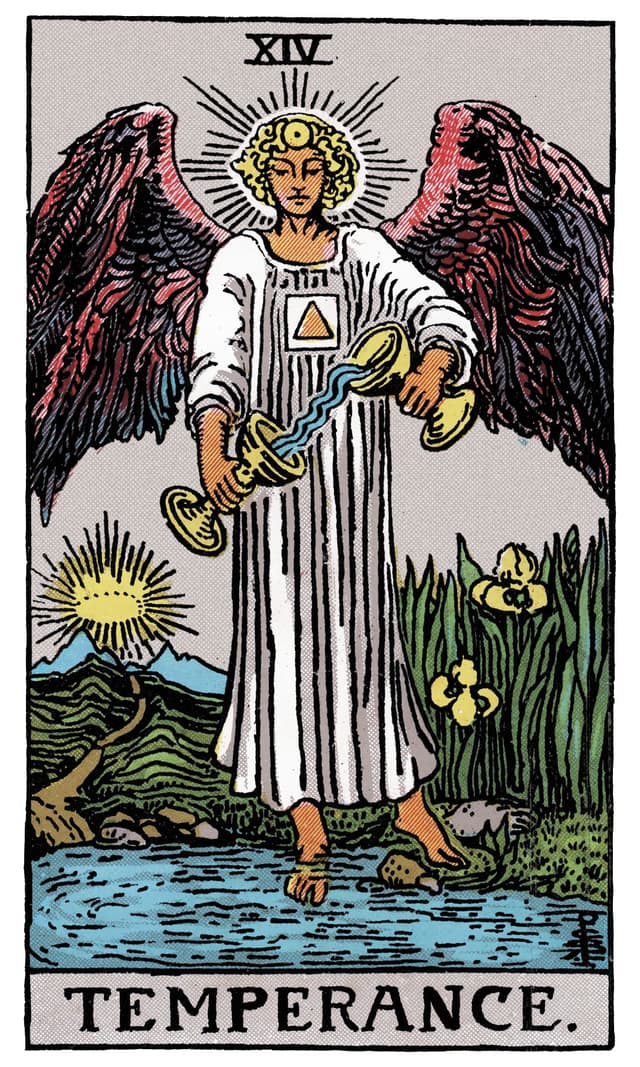
A winged angel with the sun symbol on her forehead stands with one foot on land and one in water, bridging the material and emotional realms. She pours liquid between two chalices in an impossible arc, representing the blending of opposites into something new. Behind her, a path winds upward toward distant mountains and a brilliant golden light, suggesting a long but rewarding journey. The irises at the water's edge, named for the Greek goddess of the rainbow, reinforce the theme of connection between worlds.
Upright Meaning
In love, Temperance counsels patience and compromise. Neither partner should dominate; instead, find the blend that honors both. It's also a strong signal that healing is happening in a relationship, slowly but genuinely. In career, this card favors steady progress over dramatic moves. Collaborate, be adaptable, and avoid extremes. Long-term strategic thinking beats impulsive decisions right now. Financially, moderation is key: don't overspend or over-save. Spiritually, Temperance invites you to integrate all parts of yourself, the light and the dark, the rational and the intuitive, the practical and the mystical. Wholeness comes from inclusion, not elimination.
Reversed Meaning
Reversed, Temperance warns of excess, imbalance, and impatience. You may be overindulging, overworking, or pushing a process that needs more time. Conflict between opposing parts of yourself is creating internal turbulence. There can also be a clash between personal beliefs and institutional expectations. Something in your life has tipped too far in one direction.
When You Draw This Card
Find the middle ground. Whatever is pulling you to extremes right now, the answer lies in the space between.
Grounded in A.E. Waite's Pictorial Key to the Tarot (1911, public domain), with modern interpretation.